Listen Up! Whakarongo Mai!
Listen Up! Whakarongo Mai!
A creative response to the seniors' housing crisis
Listen Up! is a socially engaged creative project exploring the housing experiences of older people in Aotearoa New Zealand. Working alongside the Christchurch Methodist Mission and senior communities in Ōtautahi Christchurch, the project team of David Cook, Anna Brown and Mathijs Siljee use storytelling, photography, graphic narratives and exhibition design to bring greater public attention to the housing challenges facing seniors and kaumātua.
Listen Up! builds on our previous project Ko Te Reo ō Ngā Tāngata / The People's Voice, taking a community-centred approach to understanding housing insecurity through lived experience. It creates opportunities for older people to share their own knowledge, concerns and aspirations, contributing directly to conversations about housing policy and provision in Aotearoa.
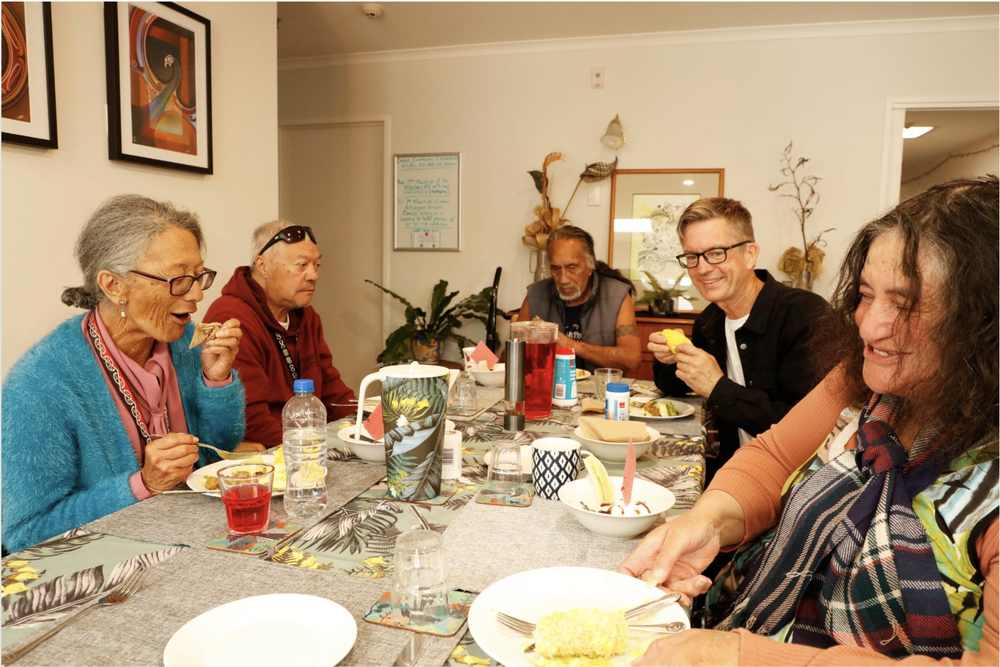
Working ‘around the table’
Listen Up! is grounded in relationship building and deep listening. David Cook worked alongside the Christchurch Methodist Mission, drawing on the trusted relationships they have developed with residents over many years. The work of the project literally happened around the table: sharing kai, conversation and stories, and following the issues and ideas that already matter to participants.
Our approach in this research is to critically examine the ethics of how seniors and kaumātua are represented in the media, questioning the bias and tired tropes that flatten the diversity and agency of older people’s lives. The issues raised through these conversations are not unique to Ōtautahi Christchurch. They reflect wider concerns emerging across Aotearoa and resonate with an expanding body of research examining housing experiences in later life.
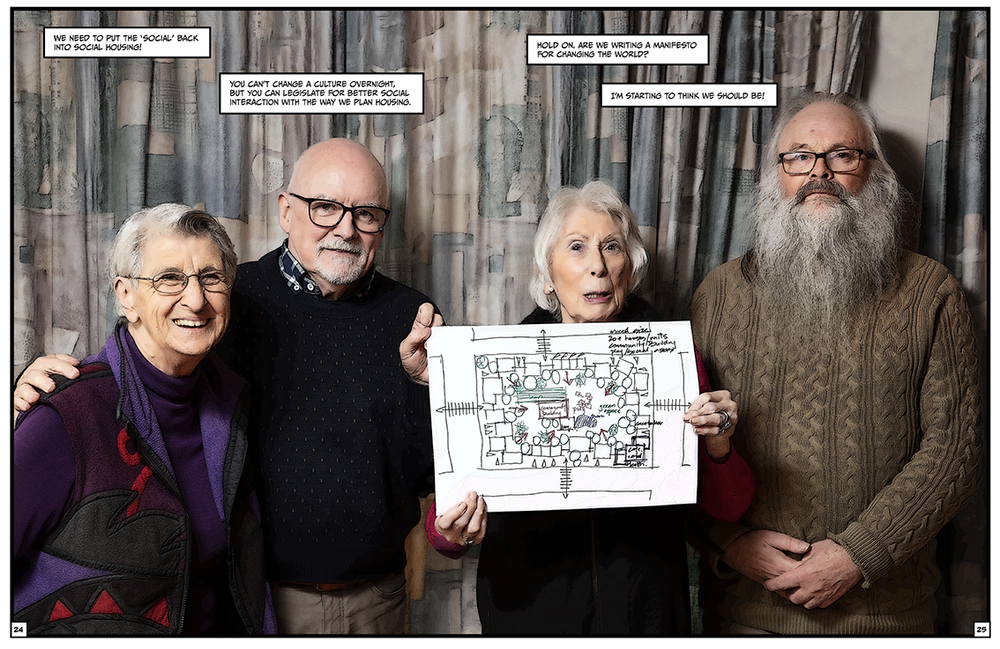
Research Context
The stories and protests arising from this creative project are mirrored in the findings of social science researchers. Reflections on Kaumātua, Pakeke and Seniors’ Housing (National Science Challenge, 2022), highlights the increasing level of housing insecurity for older people, resulting in cultural isolation and wellbeing issues, with particularly high impacts for Māori and Pasific communities. This research calls for urgent systemic change, consultation with the community, and innovative housing models (co-housing, cooperating living) to ensure older citizens maintain well-being and community connections. Without much prompting, our participants also focused on these issues.
The project is based in socially engaged art methodologies — processes that address critical issues faced by a community through collaborative and participatory art. Co-creation delivers the emotional resonance that traditional quantitative or qualitative research struggles to achieve. A champion of socially engaged art is Anthony Luvera. He works with people experiencing homelessness and LGBTQIA+ people to create invitational spaces for participants, artists and audience to engage in productive political discussion. As with the Listen Up! project, his work is encountered in the public square, political spaces and free publications.
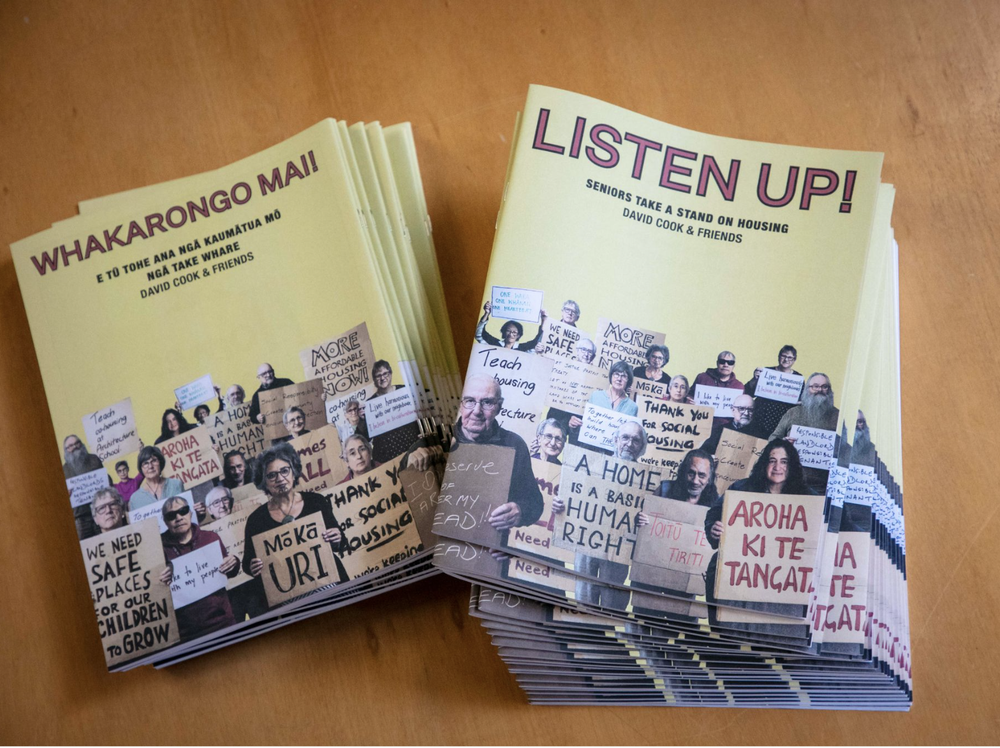
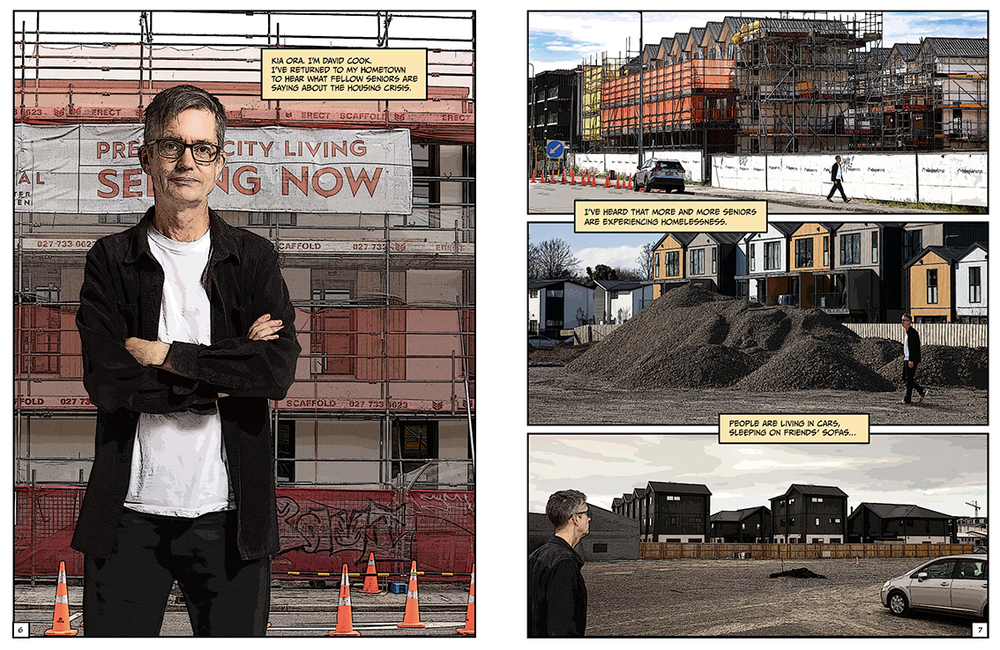
One creative output from this project is the Listen Up! publication, a 44-page comic inspired by photojournalism hybrids such as Guillermo Abril and Darío'sLa Grieta, and, closer to home, the visual storytelling of Toby Morris on Te Tiriti o Waitangi/The Treaty of Waitangi,
"You don't expect a project focused on seniors to be presented in a cartoon or comic format, and that surprise invites people to engage with the stories in a more open and accessible way."
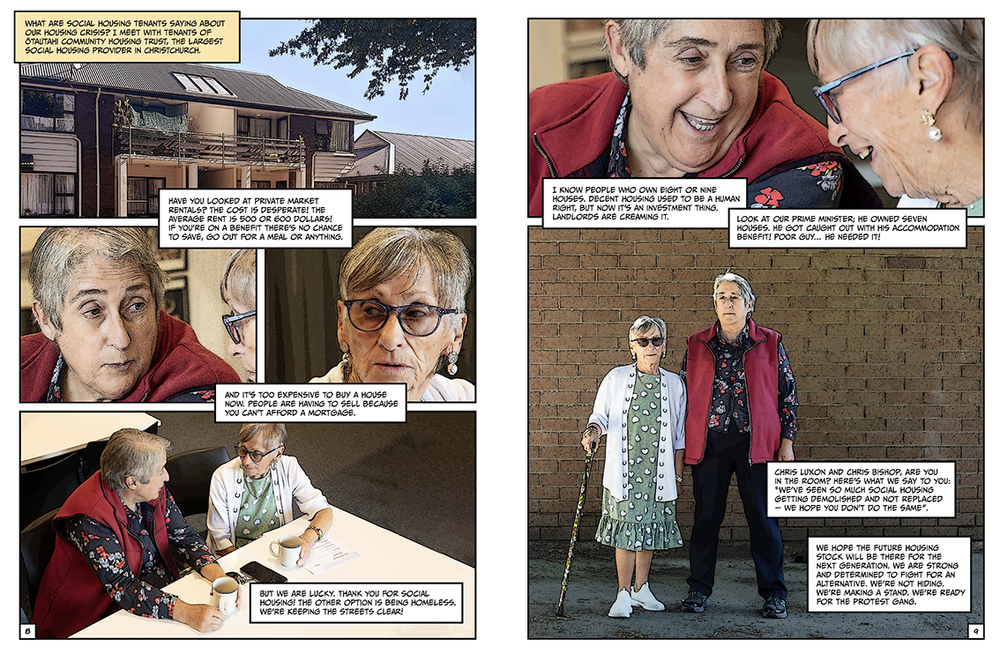
Designed as a free publication, the book weaves together personal stories, frustrations and hopes for better housing. Using the language of cardboard placards and protest, it challenges media stereotypes that portray seniors as passive consumers and instead presents them as active participants with valuable insights into what constitutes dignified and appropriate housing in later life.
The visual language of the publication draws deliberately from comics and protest graphics. The typefaces are those more commonly associated with graphic novels than policy reports, using bold uppercase lettering with a hand-drawn quality. The publication is set in Meanwhile, a typeface inspired by the comics of many readers' youth, including the unmistakable style of Asterix and Obelix. These familiar visual cues help create an accessible entry point into difficult conversations about housing, ageing and social change.
The graphic novel style of storytelling offers unique advantages. In negotiation with participants, the format was adopted as a relatable and easy-to-read means for exploring complex social themes that are too often conveyed through policy jargon or long-form journalism. Decision-makers, community members and the general public have found the pop-culture format an accessible and engaging point of entry into discussion.
The resulting publication is reflexive and honest. David appears in the book as himself, acknowledging his presence in the process rather than pretending to be an invisible observer. This transparency is central to the ethical approach of the project. The facilitator is not an objective outsider, but a collaborator in a shared creative process.
Further Impact
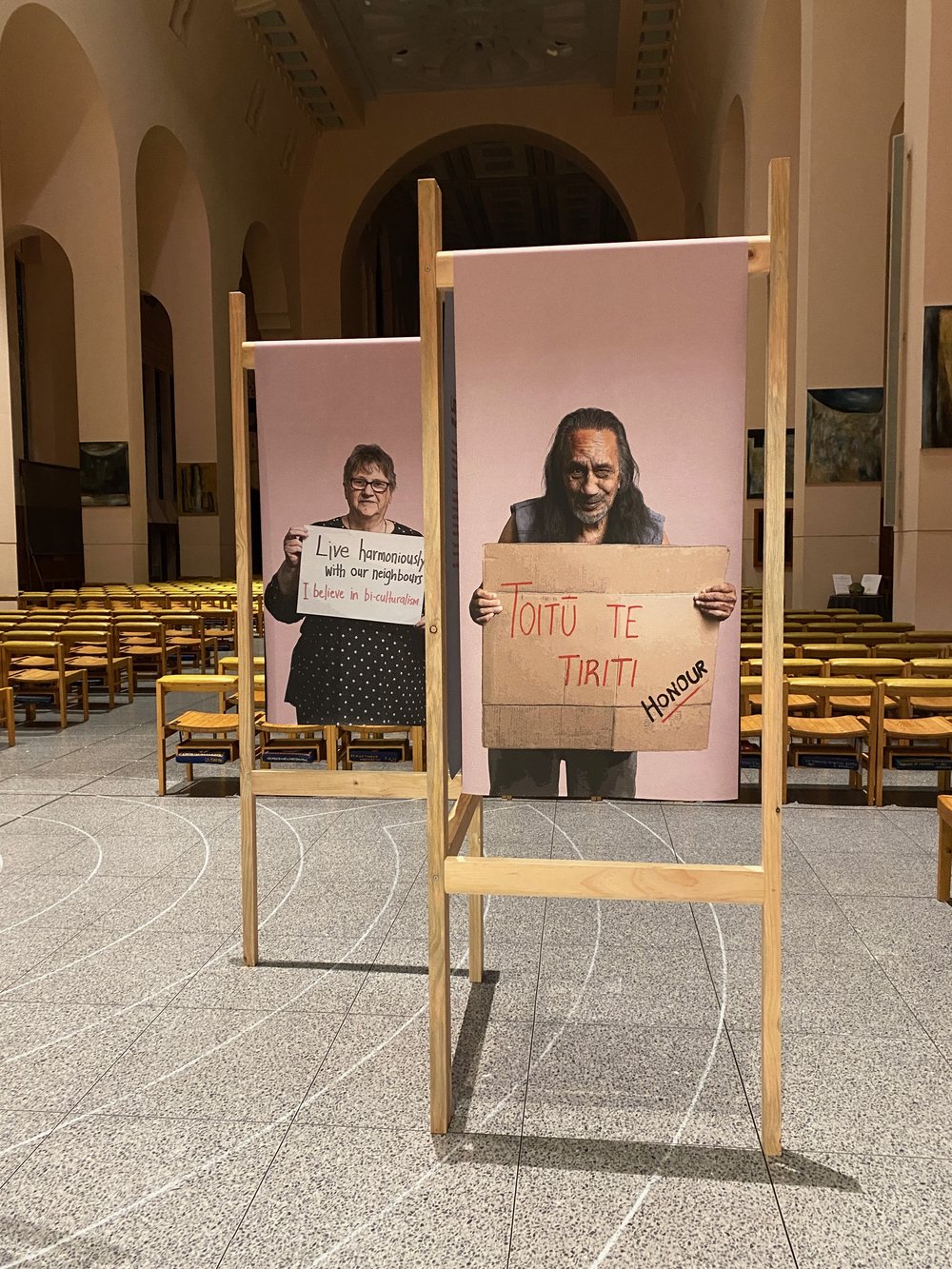
By partnering with the Doors to Dignity seniors' housing campaign., the project has been able to extended its impact. A modular exhibition system, designed by Senior Lecturer in Spatial and Industrial Design Matthijs Siljee with assistance from industrial designer and Master of Design student Kaiyu Li, has activated the project in a number of public and political spaces.
Siljee developed a bespoke wooden exhibition system that allows the photographic works and graphic panels to be easily installed, packed down and moved. The entire exhibition was designed to be movable overnight from Parliament to Wellington Cathedral.
"It's a packdown set up that means we can literally walk the exhibit across the road ready to open the following day."
Working alongside Doors to Dignity, the exhibition and publication were taken to the New Zealand Parliament to accompany presentations on senior housing by four Members of Parliament. The exhibition has also provided a provocative backdrop to further panel discussions, conferences and rallies in Christchurch, Wellington and Auckland. At each iteration project participants have been present and active in engaging with the community and sharing their stories.
Listen Up! shows how creative practice can help bring lived experience into conversations about housing, ageing and social change. Through relationships built over time, shared conversations and collaborative storytelling, the project creates opportunities for older people to contribute their perspectives to public discussion in ways that are engaging and difficult to ignore.
The stories gathered through the project speak to the importance of secure housing, community connection, dignity, and belonging in later life. They offer insights grounded in everyday experience and draw attention to the realities facing many seniors and kaumātua across Aotearoa. Together, these voices build a richer understanding of housing as a foundation for wellbeing and participation in community life.
You can read the Massey news article here.


