On the Fence
On the Fence
On the Fence is a gameful, online questionnaire that helps undecided or first-time voters discover which political parties best align with their values, helping them make a more informed voting decision.
By using the tool, users also learn more about what governments do and the different ways they can respond to important issues. The goal is to help users become more informed and confident participants in democracy, and more importantly, to get out and vote!
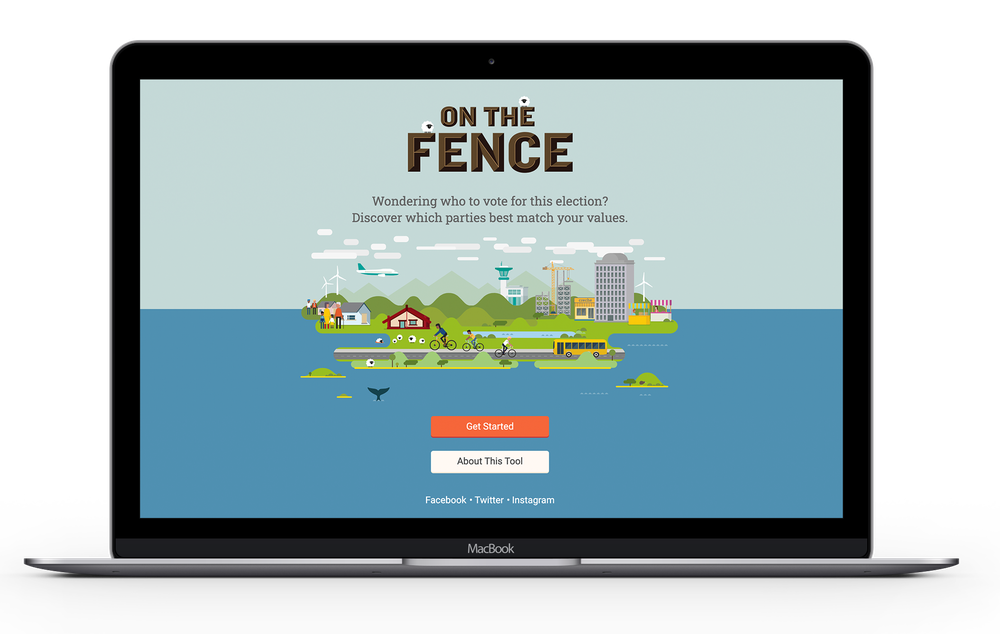
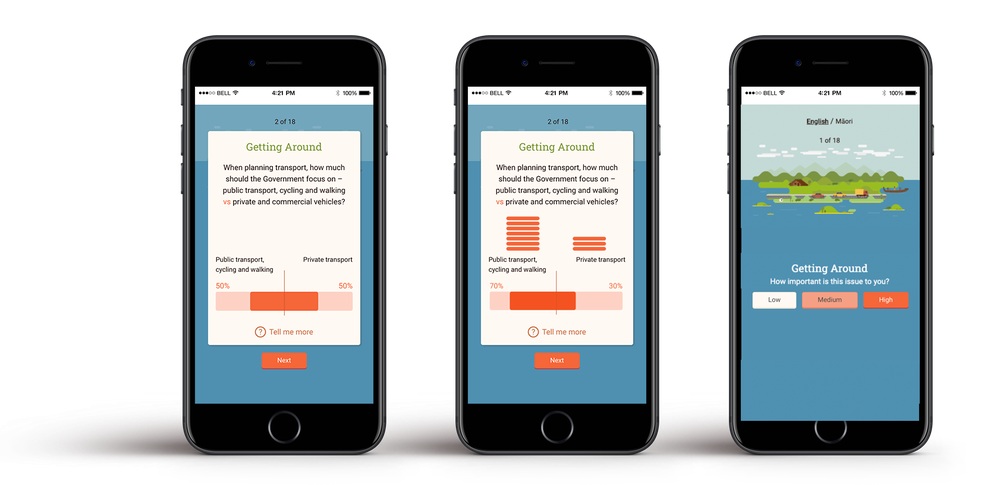
On the Fence works by asking participants a series of values-based political questions. It then compares their answers with each political party’s responses to the same questions. Based on this comparison, the tool ranks the parties according to how closely their positions align with the user’s values. Rather than relying on simple binary choices, On the Fence uses an innovative interface that presents different approaches to an issue and encourages participants to consider how they would balance two sides.
While government has a real-world impact on our daily lives, there has been a general decline in the number of people deciding who represents us in Parliament. Research shows there are several reasons people aren’t involved in politics, particularly young people. These include:
- a lack of information about political parties and what they stand for
- a lack of understanding of the Government’s importance and relevance.
On the Fence was created to lower these barriers and support young New Zealanders to become voters.
This year, we are drawing on the learnings and success of previous versions of the project. During the 2020 General Election, On the Fence was used 220,174 times. Participants answered more than 2.5 million questions, and the tool achieved a completion rate of 92.6%. Of those who used the platform, 32.3% had never voted in a general election before, and among these first-time voters, 79.3% reported that On the Fence improved their understanding of what government does.
On the Fence 2026 builds on the work and contribution of the many students, researchers and collaborators who have helped shape the project over the years. Originally started as a student project, it was developed and refined by the Design+Democracy Project for the 2014, 2017 and 2020 elections. In 2026, Toi Āria: Design for Public Good is taking the project forward in collaboration with the McGuinness Institute and Effect, continuing its aim of making political participation more accessible and engaging for young New Zealanders.


